AgentScope Multi-Agent Pipelines — MsgHub + FanoutPipeline
Build multi-agent systems with SequentialPipeline, FanoutPipeline, and MsgHub. Practical code review team pattern.
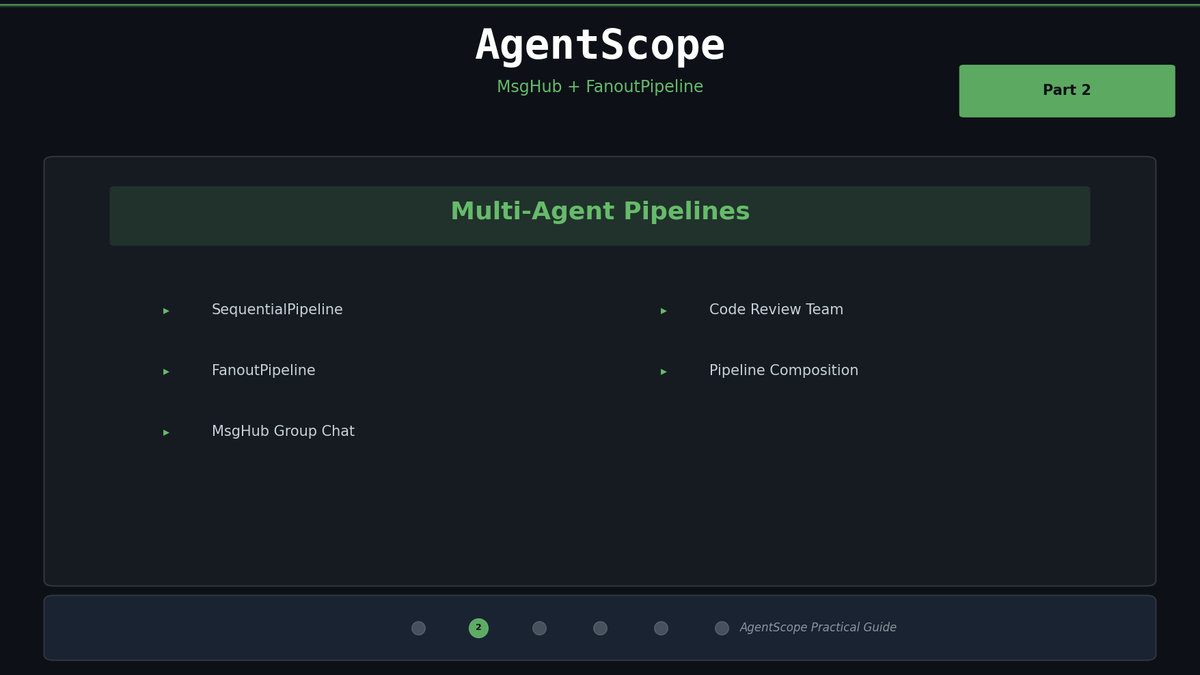
AgentScope Multi-Agent Pipelines — MsgHub + FanoutPipeline
A single agent has limits. When one agent handles research, analysis, and report writing, the prompt bloats and quality drops.
The solution is to connect specialized agents via pipelines. AgentScope provides three patterns for this.
Series: Part 1: Getting Started | Part 2 (this post) | Part 3: MCP Integration | Part 4: RAG + Memory | Part 5: Realtime Voice | Part 6: Production Deployment
1. Three Multi-Agent Patterns
This part is for subscribers
A subscription unlocks every premium series and its Jupyter notebooks.
You need a free account to subscribe. Cancel anytime.
Related Posts
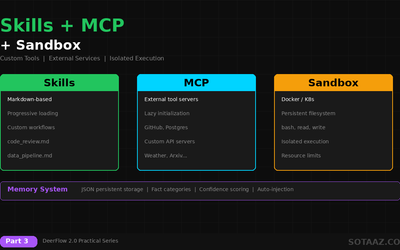
DeerFlow 2.0 Custom Skills + MCP + Sandbox — Building Your Own Tools and Workflows
DeerFlow's markdown-based skills system, MCP server integration, Docker/K8s sandbox, and persistent memory system with practical code examples.
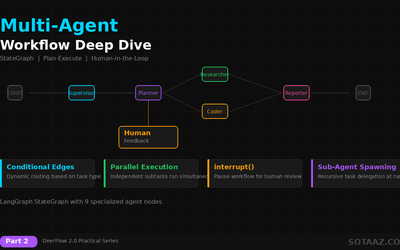
DeerFlow 2.0 Multi-Agent Workflow Deep Dive — StateGraph, Plan-Execute, Human-in-the-Loop
Code-level analysis of DeerFlow's LangGraph StateGraph-based Multi-Agent Workflow. Supervisor routing, Plan-Execute pattern, and dynamic sub-agent spawning.
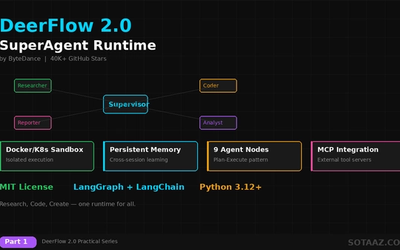
DeerFlow 2.0 Deep Dive — ByteDance's Open-Source SuperAgent Runtime
DeerFlow 2.0 architecture, setup, and first task execution. A SuperAgent runtime with 9 agent nodes, 5 tool sources, and Docker sandboxes.