Paperclip — The Open-Source Framework for Running AI Agent Companies
30K GitHub stars in 3 weeks. An open-source multi-agent orchestration platform with org charts, budgets, and governance. Heartbeat scheduling, per-agent monthly budgets, and company templates.
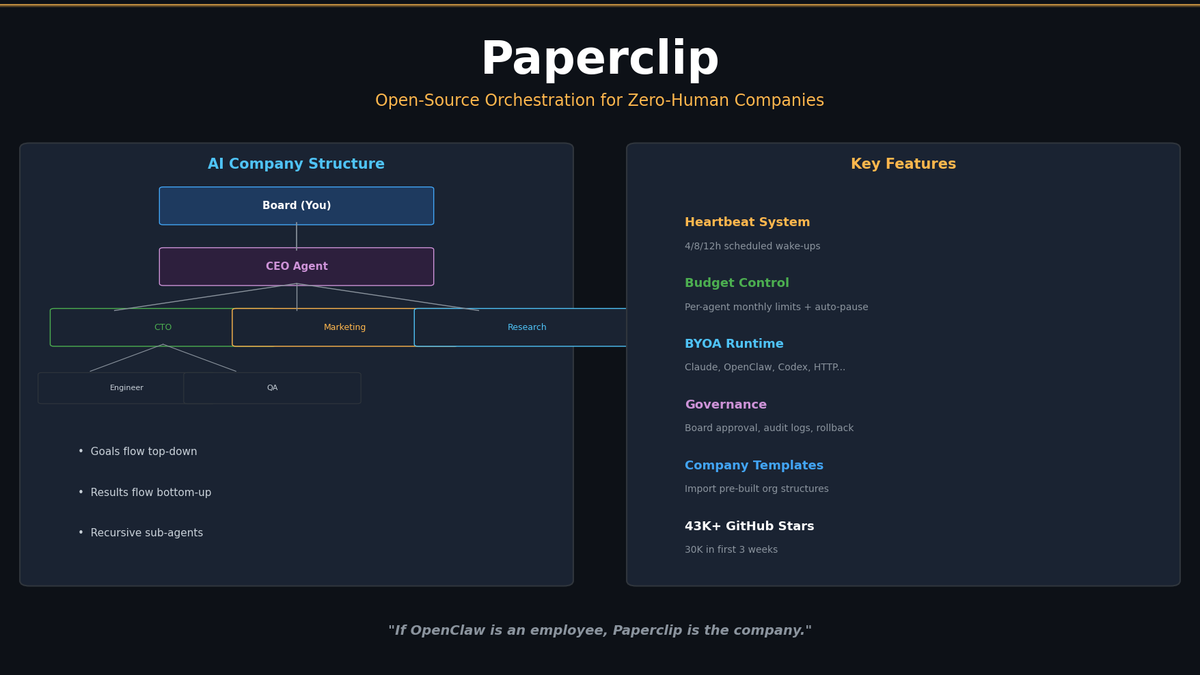
Paperclip: The Open-Source Framework for Running AI Agent Companies
Using one AI agent well is table stakes. Paperclip takes it further — it lets you organize multiple agents into a company with org charts, budgets, and governance. Launched in March 2026, it hit 30K GitHub stars in three weeks and now sits at 43K+.
"If OpenClaw is an employee, Paperclip is the company."
Core Concept: Orchestration ≠ Agent Framework
Paperclip is fundamentally different from CrewAI or AutoGen:
| CrewAI / AutoGen | Paperclip | |
|---|---|---|
| Metaphor | Team / Pipeline | Company |
| Structure | Agent message passing | Org charts, budgets, governance |
| Agent runtime | Built-in framework | BYOA (Bring Your Own Agent) |
| Execution | Called from code | Heartbeat schedule (4/8/12 hours) |
| Cost control | None | Per-agent monthly budgets + auto-pause |
Paperclip doesn't build agents. It takes existing agents — Claude Code, OpenClaw, Codex, Python scripts, HTTP webhooks — and organizes them into a functioning company.
Architecture: Like a Real Company
Org Chart
At the top sits the board of directors, and that seat is yours. Below it is a single CEO agent, and under the CEO sit a CTO agent, a marketing director, and a research specialist. The CTO manages a backend engineer and a QA engineer; the marketing director manages a copywriter. It is shaped exactly like a real company's org chart.
- Goals flow top-down (CEO → department heads → workers)
- Results flow bottom-up
- Each agent can spawn sub-agents (recursive structure)
- You're the Board — approve hires, override strategy, pause/terminate any agent
Four Identity Files: Solving the Memento Man Problem
AI agents wake up with zero memory of who they are or what they were doing. Paperclip solves this with four files:
| File | Purpose |
|---|---|
AGENTS.md | Core identity — role, goals, memory protocols |
HEARTBEAT.md | Execution checklist — steps to follow on every wake-up |
SOUL.md | Persona — decision-making style, priorities |
TOOLS.md | Tools — available tools and usage protocols |
The Heartbeat System
Agents don't run continuously. They wake up on schedule — every 4, 8, or 12 hours:
- Confirm identity via API
- Check inbox for assigned tasks and @-mentions
- Check out work atomically (prevents duplicate processing)
- Execute tasks
- Store memory for next cycle
- Report progress
- Exit cleanly
Event-based triggers also exist — direct task assignments or @-mentions wake agents immediately.
Cost Control: This Is the Killer Feature
The biggest problem with AI agents in 2026 isn't failure — it's success. Agents running autonomously can rack up tens of thousands of dollars in API costs overnight.
Paperclip's three-tier budget system:
| Tier | Threshold | Action |
|---|---|---|
| Soft warning | 80% | Alert sent, agent continues |
| Hard stop | 100% | Agent auto-paused |
| Circuit breaker | Abnormal pattern | System detects spending anomalies and blocks |
Example per-agent monthly budgets:
- CEO: $50/month
- Researcher: $100/month
- Copywriter: $75/month
- QA: $40/month
With a Claude Code Max subscription ($200/month), the dashboard shows $0 since you're using subscription allocation rather than per-token credits.
Quick Start: A "Company" in 10 Minutes
Install
npx paperclipai onboard --yesThis single command:
- Downloads the Paperclip CLI
- Creates an embedded PostgreSQL database (
~/.paperclip/instances/default/) - Generates configuration files
- Installs skills to
~/.claude/skills/ - Starts the server at
http://localhost:3100
Requirements: Node.js 20+, pnpm 9.15+
Or Clone Directly
git clone https://github.com/paperclipai/paperclip.git
cd paperclip
pnpm install
pnpm dev
Create a Company (5 Steps)
- Enter company name + mission in the dashboard
- Create a CEO agent (Claude Code or your preferred runtime)
- Assign the first task: "Build the team and create a strategy"
- CEO submits hire requests → Board (you) approves
- Organization assembled, autonomous operation begins
Real Example: LeadForge (AI Lead Generation)
From Paperclip's official tutorial:
Mission: Identify B2B prospects, craft personalized outreach sequences, and deliver qualified leads at scale.
Organization: The board (you) sits above one CEO (Claude Opus 4.6, $50/mo). Reporting to the CEO, side by side, are a lead research specialist (Sonnet 4.6, $100/mo), an outreach copywriter (Sonnet 4.6, $75/mo), and a QA specialist (Sonnet 4.6, $40/mo).
Automated Routines:
- Daily 10 AM: QA reviews past 24h leads + accuracy verification + report
- Daily 8 AM: Copywriter drafts outreach sequences
- Monday 9 AM: CEO conducts weekly strategy review
Workflow Cascade:
- You create a research issue
- CEO decomposes and assigns to Researcher
- Researcher completes → @-mentions Copywriter
- Copywriter drafts → @-mentions QA
- QA approves or sends back with feedback
This entire process runs autonomously across multiple heartbeat cycles.
Skills and Company Templates
Skills
Skills are markdown instruction files that teach agents specific processes. Add them via GitHub URLs for automatic updates.
You can apply skills company-wide or to specific agents only.
Caution: Third-party skill security is not guaranteed. Platforms like skills.sh provide security audit badges, but nothing is 100% safe.
Company Templates
Import pre-built organizational structures from github.com/paperclipai/companies:
| Template | Composition |
|---|---|
| GStack | CTO, QA engineer, release engineer |
| Agency Agents | 100+ personas |
| Game Studio | Creative director, producer, technical director |
| Scientific Research | Specialized knowledge agents |
Honest Limitations
1. "Zero-Human Company" Is Still Aspirational
Despite the marketing, no documented examples of companies actually running on Paperclip alone exist yet. Business, legal, and financial decisions still need humans.
2. Costs Add Up
Multi-agent sessions consume tokens fast. Claude Code Max ($200/month) is practically required. Running multiple agents on API credits gets expensive quickly.
3. Technical Barrier
CLI, environment variables, pnpm — this is not a no-code experience. Non-developers will struggle with setup.
4. Output Variability
Agent quality depends on the underlying model. Code agents work well, but marketing or strategy agents can be inconsistent.
Who Should Use This?
Good fit:
- Developers experimenting with multi-agent orchestration
- Teams needing AI agent cost management
- Startups wanting to automate repetitive work with agent teams
Not a good fit:
- Non-developers wanting no-code solutions
- Tasks where a single agent is sufficient
- Enterprises needing production-level stability (still early stage)
Conclusion
Paperclip addresses the next question of the AI agent era:
One agent works great. But how do you organize, manage, and control costs across many?
Org charts, budget management, governance, audit logs — Paperclip is the first to offer all of this as open source. It crossed 30K stars in three weeks because this question is that urgent.
"Zero-human companies" are still far off. But as a starting point for understanding multi-agent orchestration patterns, Paperclip delivers. Its cost control system alone tackles the most pressing real-world problem of running AI agents in 2026.
References
Related Posts
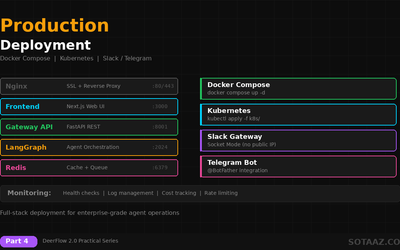
DeerFlow 2.0 Production Deployment — Docker Compose, Kubernetes, Message Gateways
Deploy DeerFlow to production with Docker Compose and Kubernetes. Connect Slack/Telegram message gateways for team access.
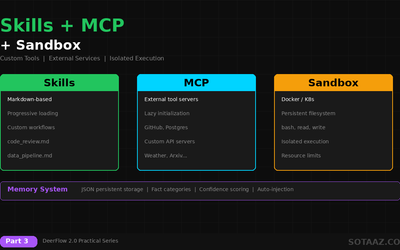
DeerFlow 2.0 Custom Skills + MCP + Sandbox — Building Your Own Tools and Workflows
DeerFlow's markdown-based skills system, MCP server integration, Docker/K8s sandbox, and persistent memory system with practical code examples.
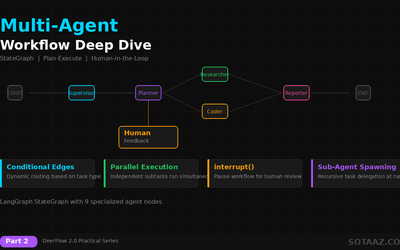
DeerFlow 2.0 Multi-Agent Workflow Deep Dive — StateGraph, Plan-Execute, Human-in-the-Loop
Code-level analysis of DeerFlow's LangGraph StateGraph-based Multi-Agent Workflow. Supervisor routing, Plan-Execute pattern, and dynamic sub-agent spawning.