The Real Reason Launches Fail: Alignment, Accountability, Operations
AI Project Production Guide for Teams and Organizations
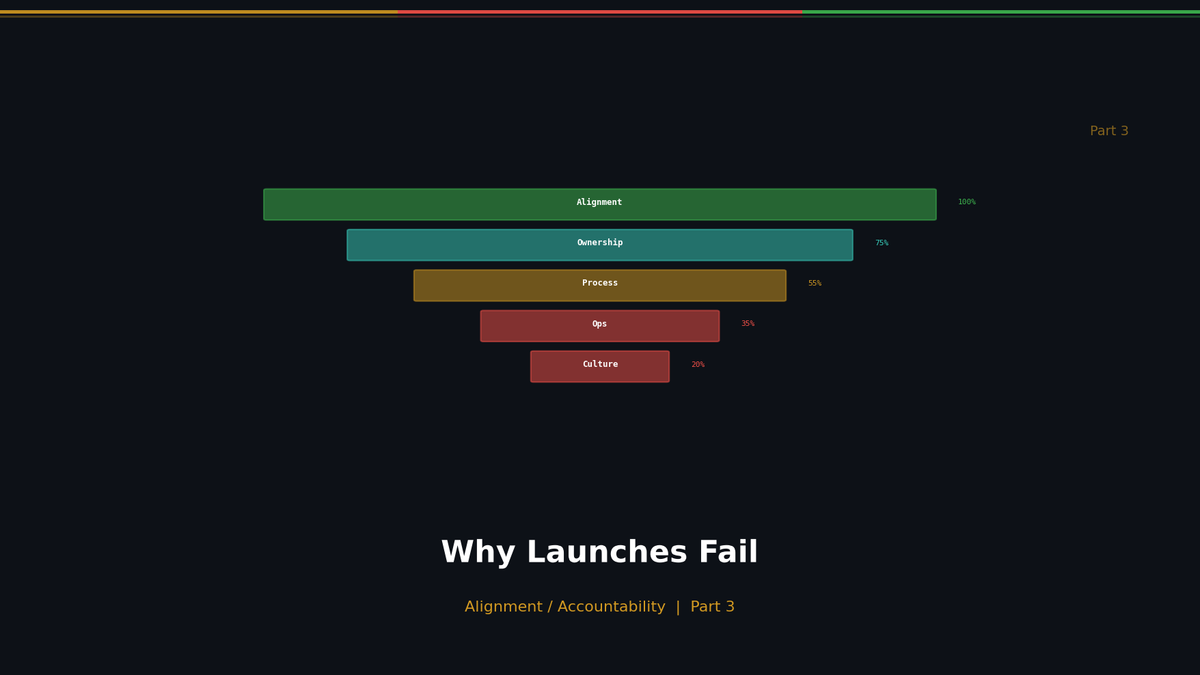
The Real Reason Launches Fail: Alignment, Accountability, Operations
AI Project Production Guide for Teams and Organizations
It's Not the Tech, It's the Organization
The code is perfect. Model performance is great. But the launch keeps getting delayed, or it quietly gets pulled within 3 months of launch.
Why? No alignment, unclear accountability, no operations framework.
The rest of this series is paid
- ✓ The whole “Demo to production” series: 3 posts in English, 3 in Korean
- ✓ 2 Jupyter notebooks
- ✓ One payment, no expiry. Opens when you sign in with the email you pay with.
The series pass needs no account to pay. The subscription needs a free account.