Retrieval Planning: ReAct vs Self-Ask vs Plan-and-Solve
Now that we've diagnosed Query Planning failures, it's time to fix them. Let's compare when each of these three patterns shines.
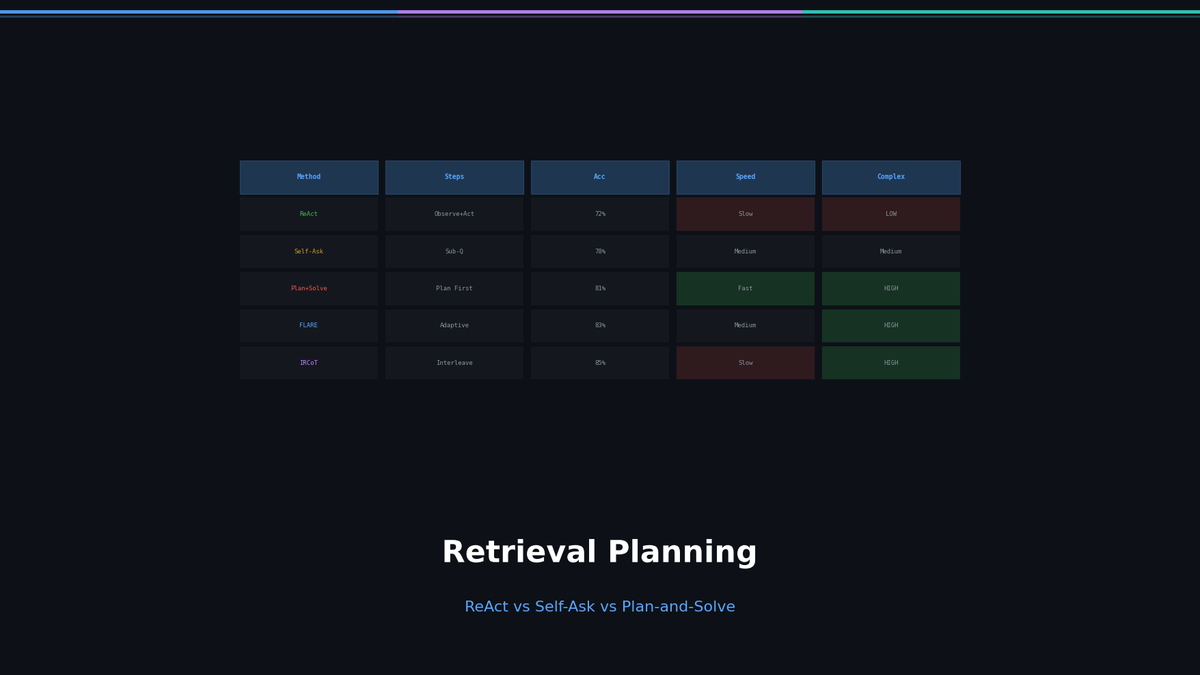
Retrieval Planning: ReAct vs Self-Ask vs Plan-and-Solve
Now that we've diagnosed Query Planning failures, it's time to fix them. Let's compare when each of these three patterns shines.
Why Retrieval Planning?
In the previous post, we examined three failure points in Query Planning:
- Decomposition: Breaking questions incorrectly
The rest of this series is paid
- ✓ The whole “Advanced RAG” series: 7 posts in English, 7 in Korean
- ✓ 7 Jupyter notebooks
- ✓ One payment, no expiry. Opens when you sign in with the email you pay with.
The series pass needs no account to pay. The subscription needs a free account.