Query Planning Failures in Multi-hop RAG: Patterns and Solutions
You added Query Decomposition, but why does it still fail? Decomposition is just the beginning—the real problems emerge in Sequencing and Grounding.
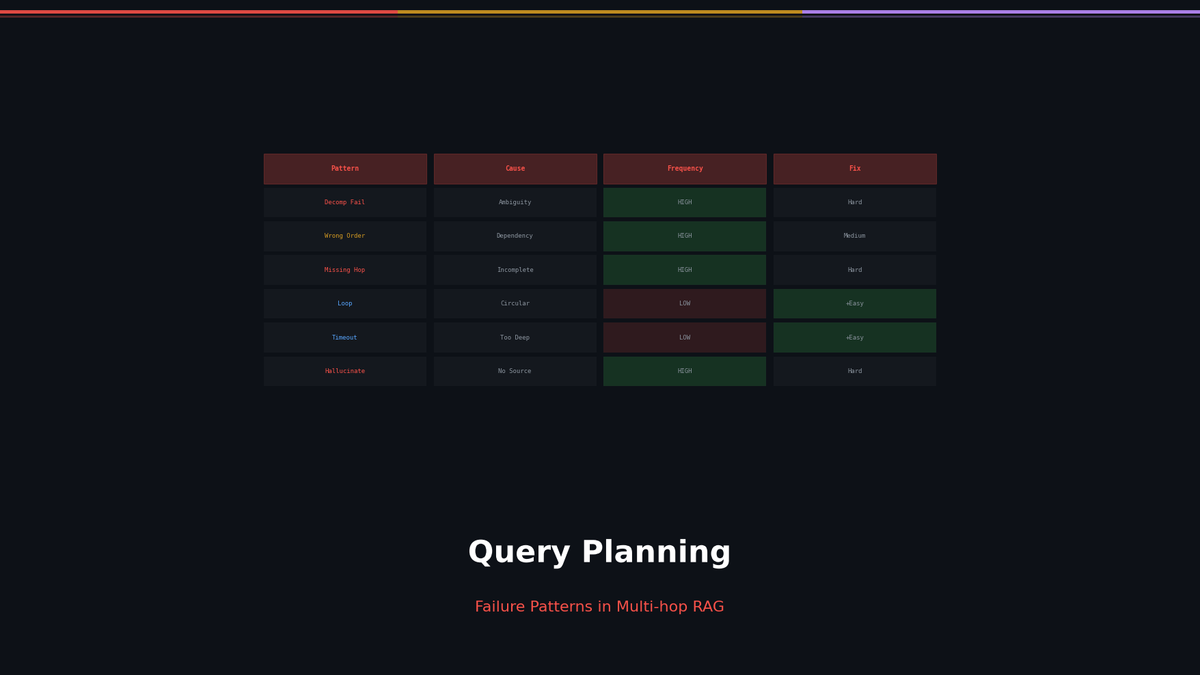
Query Planning Failures in Multi-hop RAG: Patterns and Solutions
You added Query Decomposition, but why does it still fail? Decomposition is just the beginning—the real problems emerge in Sequencing and Grounding.
What is Query Planning?
Processing complex questions in Multi-hop RAG requires three stages:
Query Planning = Decomposition + Sequencing + Grounding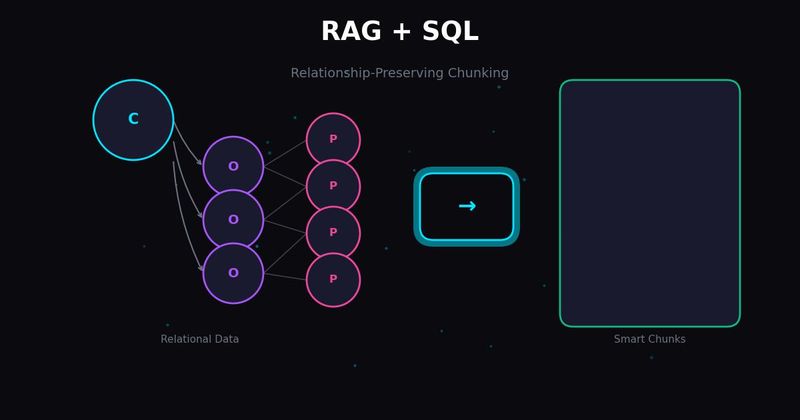
The rest of this series is paid
- ✓ The whole “Advanced RAG” series: 7 posts in English, 7 in Korean
- ✓ 7 Jupyter notebooks
- ✓ One payment, no expiry. Opens when you sign in with the email you pay with.
The series pass needs no account to pay. The subscription needs a free account.