The Real Bottleneck in RAG Systems: It's Not the Vector DB, It's Your 1:N Relationships
Many teams try to solve RAG accuracy problems by tuning their vector database. But the real bottleneck is chunking that ignores the relational structure of source data.
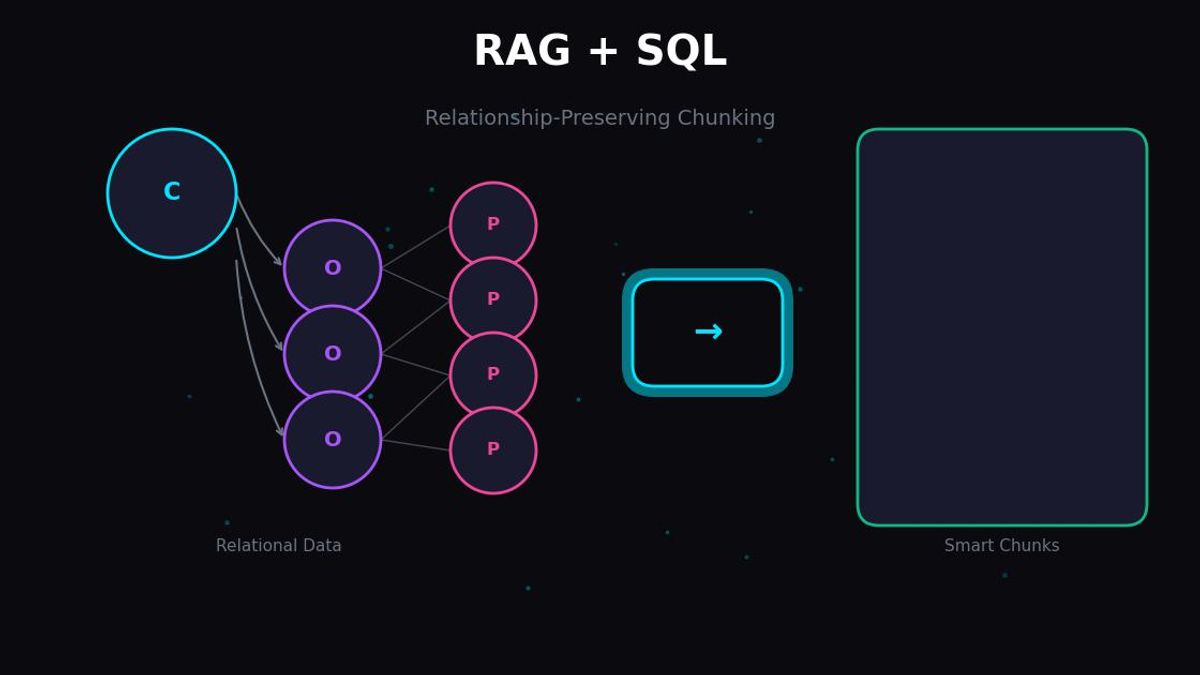
Many teams try to solve RAG accuracy problems by tuning their vector database. But the real bottleneck is chunking that ignores the relational structure of source data. When you flatten customer-order-product 1:N:N relationships into independent chunks, no amount of vector DB optimization will prevent hallucinations.
This article covers how to properly integrate SQL relational data into RAG systems.
1. Why Vector DB Alone Isn't Enough
The Problem in Reality
When building a RAG system, you've probably received questions like:
The rest of this series is paid
- ✓ The whole “Advanced RAG” series: 7 posts in English, 7 in Korean
- ✓ 7 Jupyter notebooks
- ✓ One payment, no expiry. Opens when you sign in with the email you pay with.
The series pass needs no account to pay. The subscription needs a free account.